
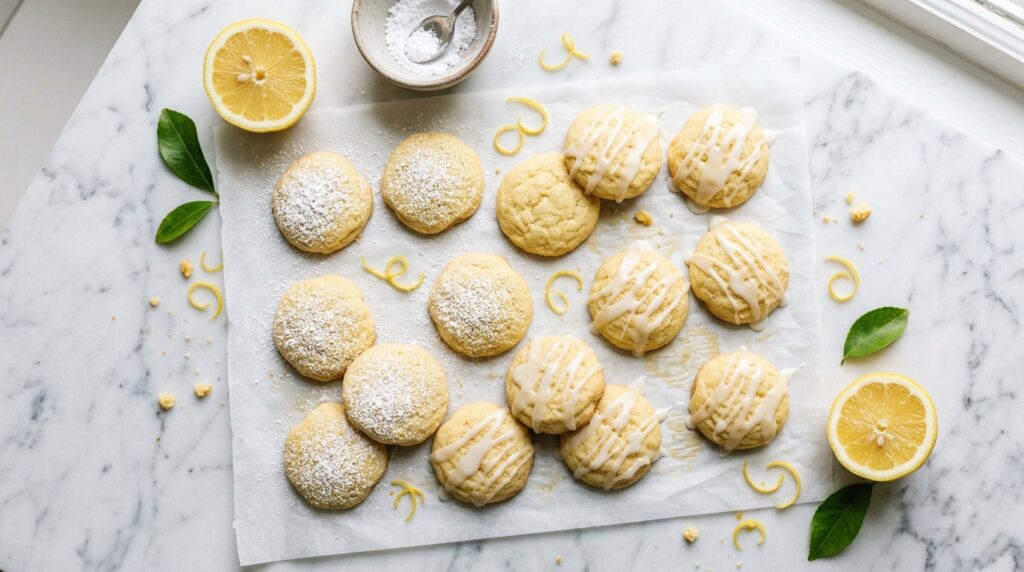
There is a cookie for every mood — and lemon cookies are the ones for when you want something bright, refreshing, and genuinely uplifting. Unlike heavier chocolate or peanut butter cookies, lemon cookies carry a lightness that makes them feel completely different from anything else in your baking rotation. They are sweet and citrusy, soft and chewy, with a zing of fresh lemon that wakes up every taste bud in the best possible way. And they are a genuine family baking favorite that children of all ages tend to love immediately.
In 2026, lemon cookies are having a significant moment — appearing on every major recipe platform’s most-visited lists, dominating Pinterest boards, and consistently ranking among the top-searched cookie recipes year-round. The appeal is not complicated: lemons are accessible, affordable, and naturally beautiful in color and flavor. The technique is simple. The result is genuinely impressive — pale golden cookies with a bright citrus note that tastes like sunshine in every bite. At Mommy and Me Cookies, lemon cookies have become one of our most-requested family baking projects, and this guide gives you everything you need to make them perfectly every single time.
Why Lemon Cookies Are the Perfect Family Baking Project
Lemon cookies hit a particularly wonderful sweet spot for family baking — they are approachable enough for very young children to help with at every stage, yet impressive enough to bring to a gathering and have everyone immediately ask for the recipe. The color is naturally beautiful — pale golden to creamy white, with visible flecks of yellow zest and a luminous glaze that photographs stunningly. And the flavor is universally appealing in a way that even chocolate cannot always achieve: bright, sweet, and fresh without being overpowering.
The Zesting Step — A Kid Favorite
One of the most appealing things about lemon cookie baking for families is the zesting step — and it is one of the most engaging kitchen tasks for children. Using a microplane or box grater to zest a fresh lemon produces immediate, visible, fragrant results that young children find genuinely magical. The kitchen fills with the most beautiful citrus aroma, the bright yellow zest accumulates in a small pile, and little ones can feel the tangible contribution they are making to the dough’s flavor before a single ingredient has been mixed. For children who are curious about cooking, this moment of cause-and-effect — zest goes in, lemon flavor comes out — is a wonderful early lesson in how ingredients work.
Naturally Beautiful Results With No Decoration Needed

Most lemon cookies are naturally beautiful without requiring any artistic decorating skill — rolled in powdered sugar before baking, they emerge from the oven with a delicate, dusty white coating and a soft, pale golden color that looks elegant and polished with zero effort. A simple two-ingredient lemon glaze — powdered sugar and fresh lemon juice — drizzled over cooled cookies adds a glossy, professional finish in about two minutes. As Chelsea’s Messy Apron’s widely-loved lemon cookie recipe explains, the key to that bakery-style thick, chewy texture is combining lemon zest — for fresh citrus flavor — with a small amount of lemon extract for punch, without adding too much liquid that would cause the cookies to spread thin and lose their beautiful shape.
The Key to Getting Lemon Flavor Right
The most common mistake in lemon cookie baking is ending up with a cookie that tastes only vaguely of lemon — a hint rather than a presence. Getting genuine, vibrant lemon flavor into a baked cookie requires understanding how the different lemon components behave in the oven, and using them in the right combination.
Zest Is Your Most Important Ingredient
Lemon zest is where the vast majority of lemon’s flavor lives — in the essential oils stored in the outermost layer of the peel. These oils are aromatic, intensely citrusy, and — crucially — fat-soluble, which means they bind beautifully with the butter in your cookie dough and distribute their flavor evenly throughout every bite. Lemon juice, by contrast, is mostly water and acid — valuable for brightness and tang, but much of its volatile aroma compounds cook off during baking. For genuinely lemony cookies, zest is non-negotiable. Use a microplane grater, zest only the bright yellow outer layer of the skin, and avoid the white pith underneath — it is bitter and will give your cookies an unpleasant edge.
Fresh vs. Bottled Juice — Why It Matters
Always use fresh lemon juice rather than bottled juice in lemon cookie recipes. Bottled lemon juice is pasteurized and often contains preservatives that give it a slightly flat, processed flavor that is noticeably different from the bright, vibrant acidity of fresh juice. Since lemon cookies rely on citrus as their primary flavor driver, the quality of that citrus matters more than in most other cookie types. One fresh lemon provides both the zest and the juice needed for most recipes — making the extra minute of squeezing entirely worth it.
The Lemon Extract Secret
For the brightest, most concentrated lemon flavor in a baked cookie, adding ¼ to ½ teaspoon of pure lemon extract alongside the fresh zest and juice makes a significant difference. Extract concentrates the essential lemon oil flavor without adding liquid that would affect the cookie’s structure. The combination of zest (fresh, aromatic flavor), juice (brightness and acidity), and extract (concentrated punch) creates a multi-dimensional lemon presence that survives the baking process completely intact — producing cookies that genuinely, unmistakably taste of lemon from the first bite to the last.
Classic Soft and Chewy Lemon Cookies Recipe
This is the foundational recipe — soft, chewy, beautifully shaped, with a bright lemon flavor throughout and a simple powdered sugar coating that gives the cookies their classic pale, elegant appearance. As Lauren’s Latest award-winning lemon crinkle cookie recipe confirms, rolling the dough generously in powdered sugar creates that signature pale coating and helps the cookies hold a clean, round shape during baking — producing results that look polished and professional from a completely beginner-level dough.
Ingredients (Makes 22 to 24 cookies)
- ½ cup (115g) unsalted butter, softened to room temperature
- 1 cup (200g) granulated white sugar
- 1 tablespoon finely grated fresh lemon zest (from approximately 2 lemons)
- 1 large egg, at room temperature
- 2 tablespoons fresh lemon juice
- ¼ teaspoon pure lemon extract (optional but recommended)
- 1 teaspoon pure vanilla extract
- 1½ cups (195g) all-purpose flour
- ¼ teaspoon baking soda
- ¼ teaspoon baking powder
- ¼ teaspoon fine sea salt
- ½ cup (60g) powdered sugar — for rolling
Step 1 — Zest First, Always
Before anything else, zest your lemons directly into the bowl with the granulated sugar. Use your fingertips to rub the zest into the sugar for about 30 seconds — this process, called “blooming” the zest, breaks down the essential oil cells in the peel and releases their flavor directly into the sugar crystals. The mixture will become slightly damp, fragrant, and a beautiful pale yellow color. This single step dramatically intensifies the lemon flavor of the finished cookies. Let your child do the rubbing — it is an enormously satisfying sensory task.
Step 2 — Cream and Mix
Add the softened butter to the zest-sugar mixture and beat until light, fluffy, and noticeably paler — about 3 minutes. Add the egg, lemon juice, lemon extract, and vanilla and mix until smooth and well combined. The mixture may look slightly curdled at this stage — this is normal and will smooth out once the flour is added. Add the flour, baking soda, baking powder, and salt and stir until just combined. The dough will be soft and slightly sticky. Cover and refrigerate for at least 30 minutes — this firms the butter, prevents spreading, and allows the lemon flavor to deepen as the zest oils continue infusing into the dough.
Step 3 — Roll and Coat

Preheat your oven to 350°F (175°C) and line two baking sheets with parchment paper. Pour the powdered sugar into a shallow bowl. Scoop the chilled dough into balls approximately 1½ tablespoons each. Roll each ball first between your palms to smooth it, then roll generously in the powdered sugar — pressing gently to ensure full, thick coverage on every surface. Do not tap off the excess. Place on the prepared baking sheets about 2 inches apart.
Kid’s task: Rolling the dough balls and coating them in powdered sugar is the moment every child in the kitchen has been waiting for. Set up the powdered sugar bowl in front of your little helper and let them coat each ball — small hands do this beautifully, and the powdery, snowy result looks absolutely magical before the cookies even enter the oven.
Step 4 — Bake to Pale Perfection
Bake for 9 to 11 minutes — until the edges are just barely set and the tops remain pale, cream-white, and slightly puffed. These cookies should not turn golden or brown on top. The bottoms will be very lightly golden; the tops will look almost underdone. This is exactly right. Lemon cookies are at their best when pulled from the oven before they fully set — they continue firming into their perfect soft, chewy texture as they cool on the tray. Overbaked lemon cookies lose their chewiness and their beautiful pale color, turning slightly dry and crumbly. If in doubt, pull them early — you can always check the bottom and return them for 1 minute if needed. For more guidance on baking time and texture issues, our cookie troubleshooting guide covers every common scenario with practical solutions.
Step 5 — Optional Lemon Glaze
For an elevated finish that adds an extra hit of lemon flavor and a beautiful glossy coating, make a simple two-ingredient glaze: whisk 1 cup of powdered sugar with 2 to 3 tablespoons of fresh lemon juice until smooth and pourable. Drizzle over the cookies once they have cooled completely — the glaze will set to a slightly firm, glossy finish within 20 minutes. A strip of lemon zest pressed into the glaze while it is still wet adds a beautiful visual detail that makes these cookies look genuinely bakery-worthy.
Four Lemon Cookie Variations to Try With Your Family
Lemon Blueberry Cookies
Fold ¾ cup of fresh or freeze-dried blueberries into the dough before chilling. Fresh blueberries create pockets of jammy sweetness that burst during baking; freeze-dried blueberries distribute more evenly and give a concentrated fruit flavor that pairs beautifully with the lemon. Lemon and blueberry is one of the most beloved flavor combinations in baking for excellent reason — the sweetness and slight earthiness of the blueberry perfectly complements the bright acidity of the lemon.
Lemon Crinkle Cookies
For the dramatic crinkle effect, roll each dough ball first in granulated sugar and then in powdered sugar before baking — the double coating creates the classic crackled surface as the cookie expands in the oven. The result is visually spectacular and structurally similar to our classic chocolate crinkle cookies — the same satisfying rise-and-crack technique applied to a citrus dough. Lemon crinkle cookies are one of the most pinned and shared cookie formats of 2026 and look extraordinary on any cookie platter.
Lemon Poppy Seed Cookies
Add 1½ tablespoons of poppy seeds to the dough for a classic flavor pairing that adds a subtle nuttiness and a beautiful visual texture. Lemon poppy seed is one of the most beloved flavor combinations in all of baking — from muffins to loaves to layer cakes — and it translates magnificently into cookie form. The tiny dark poppy seeds against the pale golden cookie create a beautiful visual contrast that makes these look sophisticated and distinctive on any cookie plate.
Lemon Thumbprint Cookies With Lemon Curd
Use the lemon cookie dough as the base for a thumbprint cookie — roll into balls, coat in powdered sugar, press a deep indentation into each center with your thumb, and fill with a small spoonful of store-bought or homemade lemon curd before baking. The curd sets into a glossy, jewel-bright yellow center that makes these cookies look absolutely stunning — a perfect companion to our classic thumbprint cookies guide, which covers the full technique and all the best filling options.
Expert Tips for Perfect Lemon Cookies Every Time
Always Use Room Temperature Butter and Egg
Cold butter will not cream properly with sugar — it will not become light and fluffy but rather chunky and dense, resulting in cookies that spread inconsistently and have an uneven texture. Cold eggs can cause the batter to seize slightly when added to the creamed butter. Let both sit at room temperature for at least 30 minutes before you begin. If you forgot to take your butter out, cut it into small cubes and let it sit for 20 minutes — it will soften more quickly in smaller pieces.
Do Not Skip the Chilling Step
Lemon cookie dough is softer than most cookie doughs because of the lemon juice content. Skipping the 30-minute chill means the dough will be too soft to roll cleanly into balls, and the cookies will spread too much and lose their shape in the oven. Chilling firms the butter, makes the dough easy to handle, and allows the lemon flavors to deepen as the zest continues infusing. If you are short on time, 15 minutes in the freezer achieves the same result.
Zest and Juice Fresh Lemons Every Time
The quality of your lemon flavor depends entirely on the quality of your lemon. Always use fresh lemons — never bottled juice for these cookies. One medium lemon typically yields about 1 tablespoon of zest and 2 tablespoons of juice, so you will usually need 2 to 3 lemons for a full batch. Roll the lemon firmly on the countertop before cutting and squeezing — this breaks down the internal membranes and significantly increases the juice yield.
A Note on Lemon’s Natural Benefits
Beyond their extraordinary flavor, lemons bring genuine nutritional value to your baking. According to Healthline, lemons are rich in vitamin C, which supports immune function and iron absorption, and contain plant compounds with antioxidant and anti-inflammatory properties. When you bake with real lemon zest and juice rather than artificial flavoring, you are incorporating these natural compounds into every cookie — a small but genuinely worthwhile bonus to an already wonderful ingredient.
Storing and Gifting Lemon Cookies
Lemon cookies store beautifully at room temperature in an airtight container for up to 5 days — and because they are naturally moist from the lemon juice and butter, they tend to stay soft and chewy for longer than many other cookie types. Store them in a single layer or separated by parchment paper to prevent the powdered sugar from transferring between cookies. For the glazed version, allow the glaze to set completely before storing.
These cookies freeze exceptionally well both baked and as raw dough balls — freeze unglazed cookies and add the glaze after thawing for the freshest, most polished result. For complete storage and freezing guidance for lemon cookies and every other cookie type, see our ultimate cookie storage and freezing guide.
For gifting, lemon cookies are one of the most universally beloved and visually beautiful options in the homemade cookie world. Their pale, elegant appearance, distinctive flavor, and fresh fragrance make them a standout in any cookie tin or gift box — and they are particularly popular for spring and summer celebrations, baby showers, and thank-you gifts.
The Cookie That Tastes Like Sunshine

There are cookies you bake because they are easy. There are cookies you bake because they are impressive. And then there are cookies you bake because they make everyone who tries them genuinely happy — the kind of cookie where someone takes a bite, pauses, and then immediately reaches for another without saying a word. Lemon cookies are that kind of cookie.
They are not the heaviest or the most indulgent option in the cookie world — but they are possibly the most refreshing, the most universally loved, and the most reliably crowd-pleasing. Children love them for their bright sweetness. Adults love them for their sophistication and their clean, vibrant flavor. And families love them for exactly the reason any recipe earns a permanent place in rotation: they are a genuine pleasure to make together, they look beautiful, and every single person at the table asks when you are making them again.
Start with the classic soft and chewy version. Add blueberries next time. Try the crinkle variation for a visually dramatic batch. Make the thumbprint version with lemon curd for a gathering that deserves something extra special. However you bake them, lemon cookies will bring exactly the brightness and joy that makes family baking so deeply worth doing.
Happy baking from all of us at Mommy and Me Cookies! 🍪🍋