
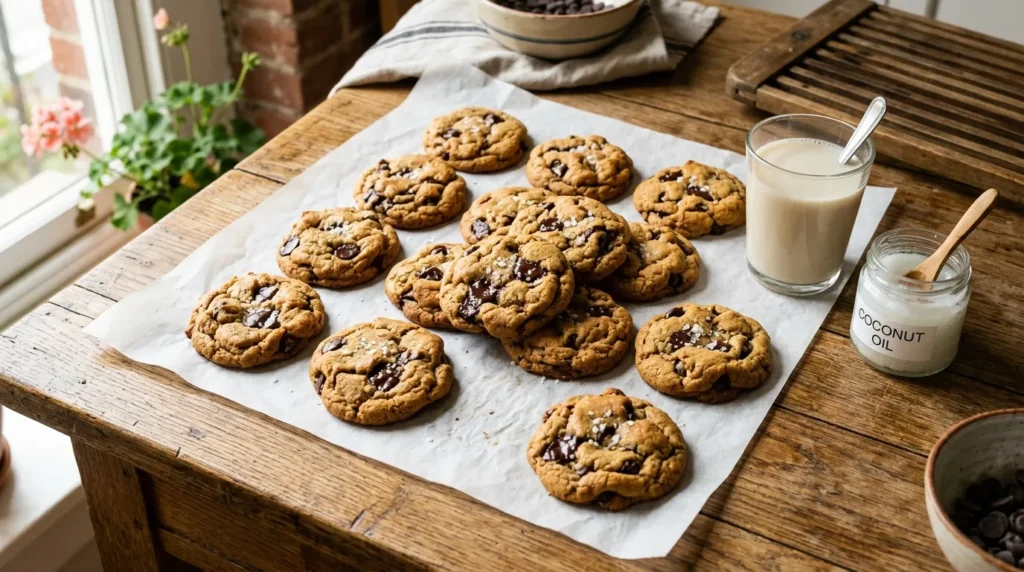
Whether your family follows a plant-based lifestyle, you are managing dairy or egg allergies, or you simply want to bake cookies that everyone at the table can enjoy without worry — vegan cookies for kids are about to become your most-used recipe category. And the best part? They taste absolutely wonderful. Soft, chewy, genuinely delicious, and completely free of eggs and dairy — without ever feeling like a compromise.
Plant-based baking has moved firmly into the mainstream in 2026. According to Plant Based News, vegan cookie baking has become fully established — with techniques and ingredient substitutions now so refined that plant-based cookies genuinely rival their conventional counterparts in texture, flavor, and overall deliciousness. At Mommy and Me Cookies, we believe every child deserves a cookie moment — and these recipes make sure that no dietary need ever gets in the way of that joy.
Why Vegan Cookie Baking Is Easier Than You Think
The biggest misconception about vegan cookie baking is that it requires obscure specialty ingredients or complicated techniques. It does not. The substitutions that make cookies vegan are largely pantry-friendly, widely available, and in many cases actually simpler to work with than the conventional ingredients they replace. Once you understand a few foundational swaps, the whole world of vegan baking opens up and becomes entirely approachable — even for first-time bakers and eager little helpers.
Replacing Eggs — The Flax Egg
Eggs serve two purposes in most cookie recipes: they bind the dough together and add a small amount of moisture. The most reliable and family-friendly vegan replacement is the flax egg — a simple mixture of 1 tablespoon of ground flaxseed and 3 tablespoons of water, stirred together and left to sit for 5 minutes until it thickens into a gel. The resulting texture closely mimics the binding function of a whole egg, and the flaxseed itself is completely flavorless in a finished cookie. Kids love helping make the flax egg — watching it transform from a watery mixture into a thick gel in just a few minutes is genuinely fascinating to young bakers.
Other excellent egg substitutes include unsweetened applesauce (3 tablespoons replaces one egg, adding moisture and a very subtle sweetness), mashed ripe banana (3 tablespoons, which adds flavor as well as binding — best for oat-based or chocolate cookies), and aquafaba — the liquid from a can of chickpeas — which whips into a foam that works particularly well in lighter, crispier cookies. Each substitute works slightly differently, so the recipe you are following will usually specify which works best for that particular dough.
Replacing Butter — Plant-Based Options That Actually Work
Vegan butter is the most straightforward dairy replacement in cookie baking — it behaves almost identically to conventional butter in terms of creaming, melting, and adding richness to the final texture. Brands like Earth Balance and Miyoko’s Creamery are widely available and produce excellent results in virtually any cookie recipe. For a whole-food alternative, coconut oil works beautifully in many cookie recipes — particularly oat-based and chocolate cookies — adding a subtle coconut note that blends seamlessly with most flavor profiles.
Replacing Dairy Milk — Any Plant Milk Works
Most cookie recipes call for very little milk — often just a tablespoon or two to adjust dough consistency. Any unsweetened plant milk substitutes perfectly: oat milk, almond milk, soy milk, and coconut milk all work interchangeably in cookie dough without affecting the final texture or flavor. Oat milk is particularly popular for its neutral flavor and creamy consistency that most closely resembles whole dairy milk in baking applications.
Three Vegan Cookie Recipes Your Kids Will Love

These three recipes are designed to be genuinely delicious — not “good for a vegan cookie,” but genuinely good cookies that happen to be vegan. Start with the chocolate chip version for the most universally beloved result, then explore the peanut butter and oat varieties as your family’s vegan baking confidence grows.
Vegan Chocolate Chip Cookies — The Classic
This is the foundational vegan cookie recipe — the one that proves, definitively, that plant-based baking does not require any sacrifice in flavor or texture. These cookies are soft and chewy at the center, slightly crisp at the edges, and loaded with dairy-free dark chocolate chips that melt into pools of richness in every bite. They come together in one bowl with no chilling required.
Ingredients (makes 20 cookies):
- 1 flax egg (1 tablespoon ground flaxseed + 3 tablespoons water, rested 5 minutes)
- ½ cup (115g) vegan butter, softened (or solid coconut oil)
- ¾ cup (165g) light brown sugar, packed
- ¼ cup (50g) granulated white sugar
- 2 tablespoons oat milk or almond milk
- 1 teaspoon pure vanilla extract
- 1¾ cups (225g) all-purpose flour
- 1 teaspoon baking soda
- ½ teaspoon fine sea salt
- 1½ cups (255g) dairy-free dark chocolate chips (Enjoy Life is a widely available brand)
Instructions: Prepare your flax egg and set aside for 5 minutes. Preheat oven to 350°F (175°C) and line two baking sheets with parchment paper. Beat the vegan butter with both sugars in a large bowl until light and fluffy — about 3 minutes by hand or 2 minutes with a mixer. Add the flax egg, oat milk, and vanilla and mix until smooth. Add the flour, baking soda, and salt and stir until just combined. Fold in the chocolate chips. Scoop rounded tablespoons onto the prepared baking sheets, spacing 2 inches apart. Bake for 10 to 11 minutes until the edges are golden and the centers still look slightly soft. Cool on the sheet for 10 minutes — they firm up beautifully as they cool into perfectly chewy cookies.
Kid’s task: Measuring and pouring the chocolate chips is the highlight step for little ones. Let them count out handfuls, stir them in, and taste-test a few along the way.
Vegan Peanut Butter Cookies — Three Ingredients
This is the simplest vegan cookie recipe on the planet, and it produces genuinely impressive results. Three ingredients, one bowl, no chilling, 25 minutes from start to finish — and the cookies are soft, peanut-buttery, naturally gluten-free, and completely irresistible. For children who love peanut butter, these are an instant favorite.
Ingredients (makes 14 cookies):
- 1 cup (250g) natural peanut butter (smooth or crunchy)
- ½ cup (100g) granulated sugar or coconut sugar
- 1 flax egg (1 tablespoon ground flaxseed + 3 tablespoons water, rested 5 minutes)
Instructions: Preheat oven to 350°F (175°C). Mix all three ingredients in a bowl until fully combined — the dough will be thick and slightly sticky. Roll into balls about 1½ tablespoons each and place on a parchment-lined baking sheet. Use a fork to press the classic crosshatch pattern into each ball, flattening them to about ½ inch thick. Bake for 10 to 12 minutes until the edges are set. Cool completely on the baking sheet — these cookies are soft and fragile when warm but firm up to a perfect texture once cooled.
Kid’s task: Making the fork crosshatch pattern is the most satisfying step for children of every age. Give each child a fork and let them press their own pattern — some will be precise, some wildly creative, and all of them will taste equally wonderful.
Vegan Oat and Raisin Cookies — Wholesome and Chewy

Oat cookies are a natural fit for vegan baking because rolled oats contribute binding, structure, and chewiness that reduces the reliance on eggs from the start. This version is warmly spiced with cinnamon, sweetened naturally with brown sugar and raisins, and produces a cookie that is hearty, satisfying, and genuinely wholesome — the kind of cookie that works as an after-school snack as readily as it does a dessert.
Ingredients (makes 18 cookies):
- 1 flax egg (1 tablespoon ground flaxseed + 3 tablespoons water, rested 5 minutes)
- ½ cup (115g) vegan butter, softened
- ¾ cup (165g) light brown sugar, packed
- 2 tablespoons oat milk
- 1 teaspoon vanilla extract
- 1½ cups (190g) all-purpose flour
- 1 teaspoon cinnamon
- ½ teaspoon baking soda
- ¼ teaspoon fine sea salt
- 1½ cups (135g) rolled oats
- ¾ cup (120g) raisins or dairy-free chocolate chips
Instructions: Preheat oven to 350°F (175°C). Beat vegan butter and brown sugar until fluffy. Mix in the flax egg, oat milk, and vanilla. Add flour, cinnamon, baking soda, and salt and stir to combine. Fold in the oats and raisins. Scoop rounded tablespoons onto parchment-lined baking sheets and flatten slightly with your palm. Bake for 11 to 13 minutes until the edges are golden. These cookies spread minimally and hold their shape well — making them ideal for lunchboxes and on-the-go snacking.
Essential Tips for Vegan Cookie Baking Success
Always Let Your Flax Egg Rest Fully
The flax egg must rest for the full 5 minutes — ideally up to 10 — before being added to the dough. This resting time allows the ground flaxseed to fully absorb the water and develop its gel-like consistency, which is what provides the binding function that replaces a conventional egg. A flax egg added too early — before it has thickened — will not bind the dough effectively and may result in cookies that spread too much or crumble after baking.
Use Softened Vegan Butter, Not Melted
Vegan butter needs to be softened to room temperature — not melted — for proper creaming. Melted vegan butter produces flat, greasy cookies because it cannot hold air during the creaming process the way softened butter can. If you forgot to take your vegan butter out of the fridge, cut it into small cubes and let it sit at room temperature for 30 minutes before beginning. If you ever run into spread or texture issues with any cookie recipe, our cookie troubleshooting guide walks through every common problem and its solution.
Do Not Overbake
Vegan cookies — particularly those made with flax eggs and coconut oil — continue to firm up significantly as they cool on the baking sheet. Pull them from the oven when the edges look set and the centers still appear slightly soft and underdone. They will firm up to the perfect chewy texture within 10 minutes of cooling. Overbaked vegan cookies dry out quickly and lose their soft center texture entirely.
Check Your Chocolate Chips
Not all chocolate chips are dairy-free. Many standard semi-sweet chips contain milk fat or butter oil — always check the ingredient label before purchasing. Enjoy Life brand chocolate chips are certified dairy-free and vegan, widely available at most major grocery stores, and work perfectly in every recipe on this list. Many dark chocolate chips with 70% cocoa content or higher are also naturally dairy-free — again, always confirm by checking the label.
Vegan Cookies and Allergy-Friendly Baking Go Hand in Hand
One of the great practical benefits of vegan cookie baking is how naturally it overlaps with allergy-friendly baking. By removing eggs and dairy from your cookie recipes, you simultaneously make them safe for children with dairy allergies and egg sensitivities — two of the most common food allergies in children. This is particularly valuable for school events, birthday parties, and playdates where you want every child to be able to enjoy the treat without worry.
For a deeper look at baking cookies that accommodate the full range of common childhood food allergies — including nut, gluten, and soy sensitivities — our comprehensive post on allergy-friendly cookie recipes for family baking pairs perfectly with these vegan recipes and gives you the tools to bake inclusively for any group of children.
Storing and Freezing Vegan Cookies
Vegan cookies store just as well as conventional cookies — in most cases, even better. The absence of dairy actually extends shelf life slightly at room temperature. Store baked vegan cookies in an airtight container at room temperature for up to 5 days, with layers of parchment between them if needed to prevent sticking. They also freeze beautifully — place cooled cookies in a single layer on a tray until frozen solid, then transfer to a zip-lock freezer bag for up to 3 months. Thaw at room temperature for 20 minutes or microwave for 15 seconds for that warm, just-baked result.
Raw vegan cookie dough (including flax egg-based dough) freezes equally well. Portion the dough into balls, freeze on a lined tray until solid, and store in a freezer bag for up to 3 months. Bake directly from frozen at the same temperature, adding 2 to 3 minutes to the baking time. For a complete storage and freezing guide covering every cookie type and format, see our ultimate cookie storage and freezing guide.
Every Child Deserves a Cookie Moment
Vegan cookies are not a lesser version of the real thing. They are the real thing — with ingredients chosen for a different set of values and needs, and results that stand up to any conventional cookie you have ever baked. The flax egg is not a workaround; it is a technique. The vegan butter is not a substitute; it is an ingredient. And the cookies that come out of the oven are not “good for vegan cookies.” They are just good cookies.
Whether you are baking for a child with dairy or egg sensitivities, a family member who has chosen a plant-based lifestyle, or simply a household that wants to explore what inclusive baking looks like in practice — these recipes deliver every time. And if you are looking to add even more nutritional value to your family’s cookie jar, our post on protein-packed cookies for kids offers additional recipes that pair beautifully with the vegan baking approach — many of the ingredients overlap, and the two philosophies combine naturally into one wholesome, delicious snack time routine.
Happy baking from all of us at Mommy and Me Cookies! 🍪🌱