
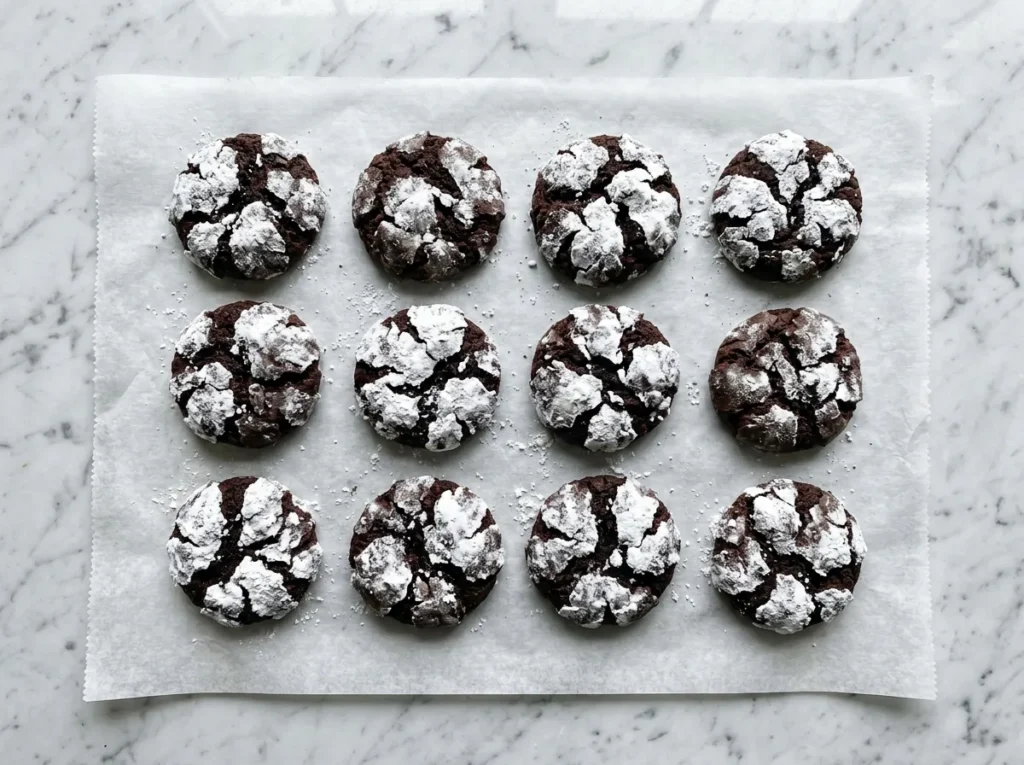
Some cookies are pretty. Some cookies are delicious. And some cookies — the truly special ones — manage to be both at the same time without trying very hard at all. Crinkle cookies fall firmly into that third category. With their dramatically crackled, powdered-sugar-dusted tops and their impossibly soft, fudgy centers, crinkle cookies are one of the most visually impressive things you can pull from a home oven — and they are genuinely one of the easiest.
After a few years of being overshadowed by elaborate hybrid pastries and social-media-first baking trends, crinkle cookies are making a confident comeback in 2026. As Food & Hotel Asia’s 2026 bakery trend report highlights, home bakers are returning decisively to beloved classics — updated, perfected, and baked with intention rather than replaced. Crinkle cookies are the perfect embodiment of that moment. They are nostalgic, they are beautiful, and they are an absolute joy to make with kids of any age.
This guide covers everything your family needs to know — the science behind the crinkle, the classic chocolate recipe, three exciting flavor variations, and every expert tip that guarantees a stunning result every single time.
What Makes a Crinkle Cookie a Crinkle Cookie?
Before we bake, let us take a moment to appreciate what makes crinkle cookies so wonderfully unique — because understanding the science behind the crackle is what separates a reliably stunning result from a batch that comes out flat and pale.
The Rise-and-Fall Science
Crinkle cookies are sometimes called “rise-and-fall” cookies — and that description perfectly captures what happens in the oven. The leavening agents in the dough cause the cookie to puff up dramatically as it bakes. But the powdered sugar coating on the outside dries and sets before the interior has finished expanding — so as the cookie continues to rise from the inside, it pushes through that hardened outer shell, creating those gorgeous fissures and fault lines that give crinkle cookies their signature appearance.
As King Arthur Baking’s test kitchen experts explain, the exterior of the cookie dries and sets before the inside fully cooks, causing that outer shell to rupture as the dough continues expanding — and the sugar coating is not just visual, it actively dries out the exterior to create the conditions for maximum cracking. It is one of the most satisfying pieces of baking science in the cookie world, and once your kids understand why the crinkles happen, they will watch the oven window with a completely new level of excitement.
The Double Sugar Secret
Here is the single most important technique for perfect crinkle cookies — and it is one that many home bakers skip without realizing how much it matters. Before rolling dough balls in powdered sugar, roll them first in granulated sugar. According to America’s Test Kitchen’s science of crinkle cookies, granulated sugar draws moisture from the surface of the dough more efficiently than powdered sugar because of its coarser, crystalline structure. This creates a thin hardened crust on the cookie’s exterior — and when the cookie expands during baking, that crust cracks along clean, dramatic fault lines. The powdered sugar layer on top stays beautifully white and snowy rather than melting into the dough, giving you that iconic crackled appearance that makes crinkle cookies so visually stunning.
This double-sugar technique is the difference between crinkle cookies that look professional and ones that look like plain chocolate cookies dusted with sugar. It takes ten extra seconds and makes an enormous difference.
The Classic Chocolate Crinkle Cookie Recipe
This is the foundational recipe — the one to master first, the one your children will request again and again, and the one that serves as the template for every variation that follows. It produces cookies that are crisp at the edges, deeply fudgy and brownie-like at the center, and dramatically beautiful in the powdered sugar coating.
Ingredients (Makes 20 to 24 cookies)
- 1 cup (130g) all-purpose flour
- ½ cup (50g) Dutch-process cocoa powder
- 1 teaspoon baking powder
- ¼ teaspoon baking soda
- ¼ teaspoon fine sea salt
- 1 cup (200g) granulated white sugar
- 2 large eggs, at room temperature
- ½ cup (120ml) neutral oil (vegetable or canola)
- 1 teaspoon pure vanilla extract
- ½ cup (85g) semi-sweet chocolate chips, melted and cooled slightly
- ½ cup (100g) granulated sugar — for rolling
- 1 cup (120g) powdered sugar — for rolling
Step 1 — Make the Dough
Whisk together the flour, cocoa powder, baking powder, baking soda, and salt in a medium bowl and set aside. In a large bowl, whisk together the granulated sugar, eggs, oil, and vanilla until smooth and slightly thickened — about 90 seconds of good whisking. Stir in the melted chocolate. Add the dry ingredients and stir until just combined. The dough will be soft, sticky, and very dark. Cover the bowl tightly and refrigerate for at least 2 hours — overnight is even better. Chilling is not optional here; it firms the dough enough to roll and develops the flavors significantly.
Step 2 — Set Up Your Rolling Station

This is where the kids come in — and it is the most fun part of the whole process. Set up two shallow bowls side by side: one filled with granulated sugar, one with powdered sugar. Use a cookie scoop or tablespoon to portion the chilled dough into balls about 1½ tablespoons each. Roll each ball first in the granulated sugar — coating generously — then immediately roll in the powdered sugar, pressing gently to make sure every surface is fully coated. Place on a parchment-lined baking sheet 2 inches apart. Do not knock off the excess sugar. That thick coating is what creates the dramatic crinkle.
Step 3 — Bake at the Right Temperature
Preheat your oven to 325°F (165°C) — slightly lower than a standard cookie temperature. This slightly lower heat gives the cookies more time to spread and expand before the exterior fully sets, which is exactly what produces the maximum number of dramatic cracks. Bake for 11 to 13 minutes until the cookies are puffed and the tops are beautifully cracked. The centers will look slightly underdone — this is correct. They firm up to a perfectly fudgy texture as they cool. Do not overbake. For more help troubleshooting cookie texture and spread issues, our cookie troubleshooting guide covers every common scenario with practical fixes.
Step 4 — Cool and Marvel
Let the cookies cool on the baking sheet for 10 full minutes before transferring to a wire rack. The cooling period is when the magic finalizes — the crackled exterior firms up, the powdered sugar sets into its white coating, and the center settles into that dense, brownie-like fudginess that makes these cookies so irresistible. Line them up on a rack and admire the result. They look like they came from a professional bakery. They came from your kitchen. That is one of the great joys of crinkle cookies.
Three Crinkle Cookie Flavors to Try With Your Kids
Once you have mastered the chocolate version, the crinkle cookie formula is remarkably adaptable. Here are three family-tested flavor variations that use the same basic technique with delicious and distinct results.
Lemon Crinkle Cookies
Lemon crinkle cookies are bright, citrusy, and absolutely beautiful — the pale yellow dough against the stark white powdered sugar creates a clean, fresh visual that is completely different from the chocolate version but equally stunning. They are a wonderful spring and summer variation and consistently one of the most popular crinkle cookie flavors with children who prefer fruity flavors over chocolate.
Use 1½ cups all-purpose flour, 1 teaspoon baking powder, ¼ teaspoon salt, ¾ cup granulated sugar, ½ cup unsalted butter (softened), 1 large egg, 2 tablespoons fresh lemon juice, and 1 tablespoon finely grated lemon zest. Cream the butter and sugar, beat in the egg, lemon juice, and zest, then mix in the dry ingredients. Chill for 1 hour, roll in granulated then powdered sugar, and bake at 350°F for 10 to 12 minutes. The result is a soft, chewy cookie with a bright lemon flavor and the same dramatic crackled exterior.
Red Velvet Crinkle Cookies
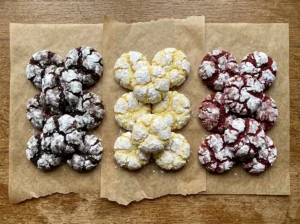
Red velvet crinkle cookies are showstoppers — the deep red dough beneath the cracked white powdered sugar coating is one of the most visually dramatic cookie results you can achieve at home. They taste of subtle chocolate and vanilla with a hint of tang from cream cheese or buttermilk, and they are absolutely perfect for Valentine’s Day, Christmas, or any occasion where you want to arrive with something genuinely memorable.
Start with the chocolate crinkle base recipe, reduce the cocoa powder to 2 tablespoons, add 1 to 1½ tablespoons of red gel food coloring, and substitute ¼ cup of the oil for full-fat cream cheese (softened and whisked smooth). The cream cheese adds a slight tang and a richer, denser texture that pairs beautifully with the red velvet flavor profile. Roll and bake exactly as the chocolate version. The contrast of deep red and pristine white when they crack in the oven is genuinely breathtaking.
Strawberry Crinkle Cookies
Strawberry crinkle cookies are a more recent addition to the crinkle cookie family and have become enormously popular with younger children for their vibrant pink color and fruity sweetness. They are naturally gluten-friendly in flavor (no cocoa or strong spice to compete with the fruit), and the pale pink dough against white powdered sugar creates a soft, pretty result that works beautifully for birthday parties, Valentine’s Day, or baby shower cookie platters.
Use 1½ cups all-purpose flour, 1 teaspoon baking powder, ¼ teaspoon salt, 1 cup granulated sugar, ½ cup softened butter, 1 large egg, 1 teaspoon vanilla, and 3 tablespoons freeze-dried strawberry powder (grind freeze-dried strawberries in a food processor until fine). A few drops of pink gel food coloring intensifies the color beautifully. Mix, chill for 1 hour, roll in the double sugar coating, and bake at 350°F for 10 to 11 minutes. The result is soft, sweet, and genuinely beautiful — one of the most kid-friendly crinkle variations in any collection.
Expert Tips for Perfect Crinkles Every Time
Always Chill the Dough
Every crinkle cookie recipe works better with chilled dough. Cold dough firms up enough to roll cleanly into balls, holds its shape better going into the oven, and spreads at a more controlled rate — which is exactly what produces clean, dramatic cracks rather than flat, spreading puddles. Minimum chill time is 2 hours. Overnight is ideal. The dough keeps refrigerated for up to 3 days, making crinkle cookies an excellent make-ahead baking project.
Use Fresh Leavening
As King Arthur Baking notes, old or expired baking powder is one of the most common reasons crinkle cookies fail to crinkle. If your baking powder has been open for more than 6 months, test it — drop a teaspoon into hot water and it should bubble vigorously. If it does not, replace it before baking. The crinkle depends on a strong rise from inside the cookie, and that rise depends entirely on active leavening.
Never Skip the Granulated Sugar Step
Roll in granulated sugar first, then powdered sugar — every single time, without exception. This is the single most impactful technique tip in crinkle cookie baking and the one most often skipped. The granulated sugar layer creates the hardened exterior crust that the cookie pushes through during baking. Without it, the powdered sugar simply absorbs into the dough and the cookies emerge pale and under-crinkled.
Coat Generously
More sugar coating means more dramatic crinkles. Do not tap off the excess powdered sugar before placing cookies on the baking sheet. Press each ball gently into the sugar to ensure full, thick coverage on every surface. The drama of the final crinkle is directly proportional to the thickness of the sugar coat going in.
How to Store Crinkle Cookies and Make Them Ahead
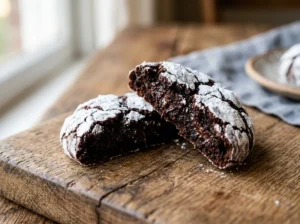
Crinkle cookies store beautifully and actually improve on day two — the centers become even fudgier as the cookies settle. Store in an airtight container at room temperature for up to 5 days, with layers of parchment between them to prevent the powdered sugar from smudging. They freeze excellently both as baked cookies and as raw dough balls — freeze the shaped, sugar-coated dough balls on a tray until solid, then transfer to a freezer bag. Bake directly from frozen at the same temperature, adding 2 to 3 minutes to the baking time. For a full breakdown of every storage method and freezing technique, see our ultimate guide to storing and freezing cookies.
Make Crinkle Cookies Your Family’s New Classic
There is a reason crinkle cookies have been a beloved home-baking staple for generations — and a reason they are coming back so strongly in 2026. They are genuinely, effortlessly spectacular. They require no decorating, no piping, no special tools, and no artistic skill. The cookie decorates itself in the oven, and the result looks like something from a high-end bakery every single time you follow the technique correctly.
For families who love baking together, crinkle cookies hit a perfect sweet spot. The rolling and coating step is endlessly engaging for children of every age. The oven transformation — watching plain dough balls crack open into beautifully patterned cookies — never gets old, no matter how many times you bake them. And the eating — soft, fudgy, dusted in snow-white powdered sugar — is always the best part.
Start with chocolate. Add lemon for spring. Make red velvet for the holidays. Try strawberry for Valentine’s Day. And whenever your family is looking for a new creative baking project, our collection of fun and easy cookie recipes for kids has plenty more ideas to keep the kitchen busy and the cookie jar full all year long.
Happy baking from all of us at Mommy and Me Cookies! 🍪